
Съвети
26 August 2026 · 9 min read
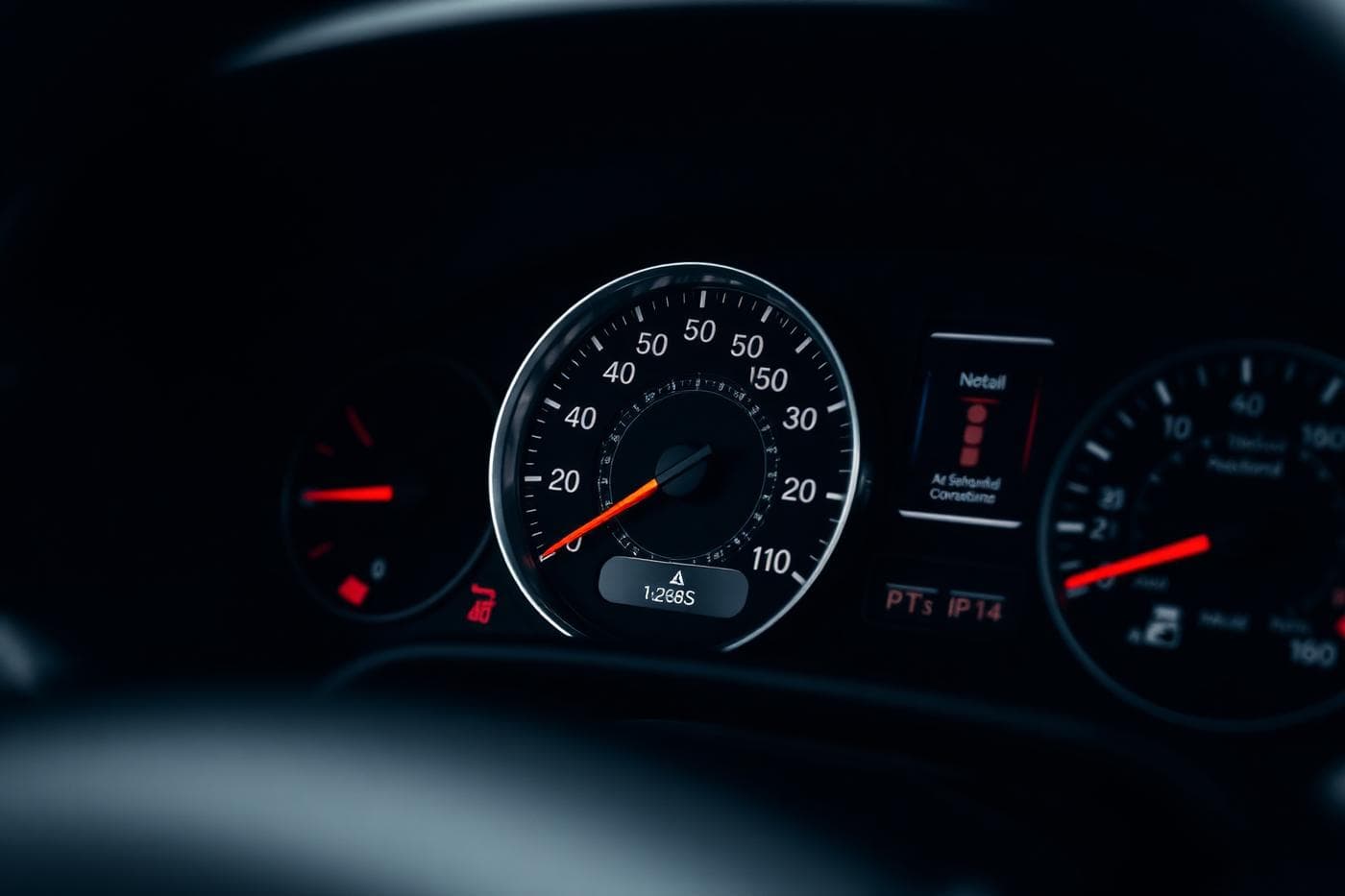
The mileage displayed on the dashboard is one of the first details buyers notice in a used-car listing. Yet the figure alone does not establish how far the vehicle has actually travelled. To assess whether it is credible, you need to compare dated mileage records, maintenance documentation, diagnostic findings and the vehicle's physical condition.
The guiding principle is simple: do not look for one definitive report; look for a consistent history supported by independent sources. This guide explains how to build that picture, including an official vehicle check available in Bulgaria.
A reliable mileage assessment involves five complementary steps:
No individual step guarantees that the displayed mileage is genuine. What matters is whether the evidence agrees across different sources.
A VIN (Vehicle Identification Number) identifies a particular vehicle. On most modern passenger cars, it contains 17 characters. The VIN helps connect service documents, inspection results and historical records to the same vehicle; it does not, by itself, contain a complete record of the distance travelled.
Ask the seller for the VIN before arranging a viewing. Compare it with the registration documents, the identification markings on the vehicle and any maintenance records. If the details do not match—or the seller refuses to provide the VIN without a reasonable explanation—do not treat the claimed history as verified.
Bulgaria's Executive Agency Automobile Administration (EA Automobile Administration) lists an online service called Vehicle Check by VIN. Its public interface is intended to provide available vehicle inspection information, including recorded odometer data. The service is also linked from the agency's official enquiries page.
When using the check:
Important limitation: The Bulgarian service reflects information available in the relevant national inspection records. It does not establish the full lifetime mileage of a car that was driven abroad for years before arriving in Bulgaria. Gaps or data-entry errors are also possible.
A stamped service booklet can be useful, but it is not sufficient proof on its own. A stronger maintenance trail contains records that can each be linked to a date, VIN, odometer reading and identifiable service work.
Ask for invoices, workshop job cards, warranty-repair documents and digital service records where the manufacturer offers them. If possible, ask an authorised service centre to confirm the records through the manufacturer's system. Access and completeness vary by brand, market and data-access rules.
Focus on chronology. For example, if an invoice dated May 2022 records 146,000 km but the car is advertised in 2026 with 132,000 km, that is a significant inconsistency requiring an explanation. On the other hand, a gap in the paperwork does not automatically prove odometer manipulation: maintenance may have been performed by an independent workshop that does not contribute to a centralised database.
The authenticity of the documents matters just as much as the sequence of numbers. Where feasible, verify an invoice or record with its issuing workshop instead of relying on a photograph supplied by the seller.
On some vehicles, suitable manufacturer-specific diagnostic equipment can retrieve distance-related values or operating data from more than one electronic control module. Depending on the make and model, these may include the instrument cluster, engine control unit, transmission system or other components.
This can be particularly helpful if a qualified technician identifies conflicting stored values. However, not every module records a vehicle's total lifetime distance, and the figures available may refer to different events or functions. A recorded distance since a fault occurred, for example, is not necessarily the vehicle's overall mileage.
Matching numbers across modules are not conclusive proof either. An instrument cluster may have been replaced, software may have been changed, or mileage-related data may have been altered. Any such finding needs to be assessed together with invoices, repair history and the identity of the installed components.
For this reason, an independent pre-purchase inspection using model-appropriate diagnostic tools is more valuable than a basic OBD scanner showing a single number. The technician's interpretation is essential.
Physical condition provides useful supporting clues. During the inspection, check whether wear seems consistent with the car's claimed age and mileage:
None of these signs can be converted into an exact odometer estimate. Urban use, driving habits, heat, material quality and previous repairs all affect wear. A carefully maintained high-mileage car may look better than a neglected low-mileage example.
The conclusion: physical wear can support or challenge the claimed history, but it cannot replace documented mileage evidence. This is also consistent with the advice in the US National Highway Traffic Safety Administration's odometer-fraud guidance.
Consider this illustrative example, not an actual vehicle history:
| Date | Source | Recorded mileage |
|---|---|---|
| October 2021 | Service invoice | 84,500 km |
| June 2023 | Roadworthiness inspection | 127,300 km |
| April 2025 | Workshop job card | 172,800 km |
| October 2026 | Listing and odometer display | 119,600 km |
The final figure is lower than an earlier documented reading. This is a major warning sign, but first establish whether each record belongs to the same VIN, whether a data-entry mistake occurred and whether an instrument-cluster replacement was properly documented.
For every discrepancy, check four things: vehicle identity, record date, unit of measurement and source of information. A car with a history in a market using miles requires special care. Do not compare miles with kilometres as if they were the same unit; 1 mile is approximately 1.609 km.
An apparently steady increase is reassuring, but not absolute proof. Manipulation could have happened before the earliest surviving record.
For an imported car, look for records from the country where it was actually used, not merely the first Bulgarian inspection after import.
Some markets provide particularly useful official systems:
For vehicles from South Korea, Japan, the United Arab Emirates and other sourcing markets, the types and availability of records differ. Service documents, auction records, inspection reports or archived listings may exist, but they are not universally accessible. The key is to establish that each item genuinely refers to the particular vehicle and comes from a traceable source.
A commercial VIN-history report can be useful, especially when it includes earlier listings or dated readings. Yet a report with no mileage alerts does not certify genuine mileage. Private databases do not have comprehensive access to every workshop or national register worldwide.
The strongest approach combines several independent sources rather than treating one clean check as definitive.
| Source | What it may establish | Main limitation |
|---|---|---|
| Official inspection records | Odometer readings on recorded dates | Limited to available records and markets |
| Service invoices and history | Maintenance chronology and associated mileage | Missing records or documents that cannot be authenticated |
| Electronic diagnostics | Possible inconsistencies between vehicle systems | Model-specific data and interpretation |
| Physical inspection | Condition and signs of use | Cannot determine exact lifetime mileage |
| Commercial VIN report | Possible historic readings and previous listings | Incomplete and variable coverage |
Ask what each source has actually verified—and what remains unknown. A lack of negative findings is not equivalent to proof that the displayed mileage is correct.
If a seller will not allow reasonable checks or cannot explain a material discrepancy, reconsider the level of risk before committing money.
Low mileage does not guarantee good mechanical condition. Extended periods of inactivity, repeated short journeys, missed servicing and previous repairs may be just as important as total distance. Conversely, a vehicle with more kilometres and a coherent service record can be a more predictable purchase than one displaying an attractive figure but offering little evidence behind it.
When considering a car sourced to order, the vehicle's origin, service history and technical condition should form part of the evaluation of that particular offer. Kaizen Motors supports vehicle selection and sourcing, including from international markets where the availability of historical records can differ considerably.
You can explore how the Kaizen Motors process works or submit a vehicle sourcing enquiry. For a specific car, ask what history documents are available and which checks can be arranged before a purchase decision.
Not with absolute certainty. A VIN helps locate and connect records to the correct car, but the identifier itself does not contain a complete mileage history. The value of a VIN check depends on the information available for that vehicle.
Bulgaria's Executive Agency Automobile Administration provides an online VIN-based public vehicle check. You can consult available recorded information without treating the result as a complete pre-purchase history assessment. Availability and the depth of individual records may vary.
Diagnostics may expose significant discrepancies on certain vehicles, but their reliability depends on the make, model and the data stored in the relevant modules. Findings should be interpreted by a specialist alongside documents and other evidence.
It means the particular provider does not have relevant records available. It proves neither that the odometer is correct nor that it has been altered. Continue with official records, maintenance documents and an independent inspection.
Not necessarily. Evaluate its documented history, servicing, mechanical condition and likely future maintenance costs. A well-documented higher-mileage vehicle can represent less uncertainty than a suspiciously low-mileage car with unexplained gaps.